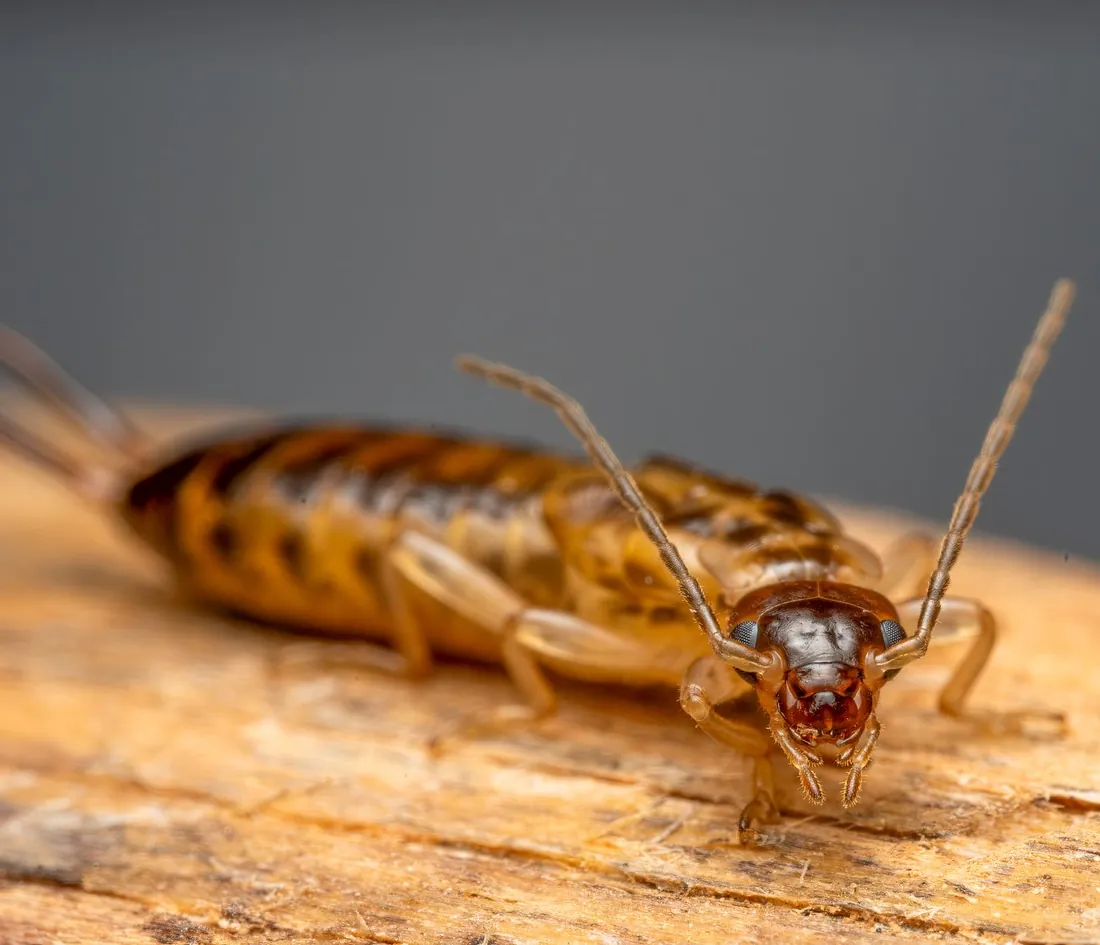
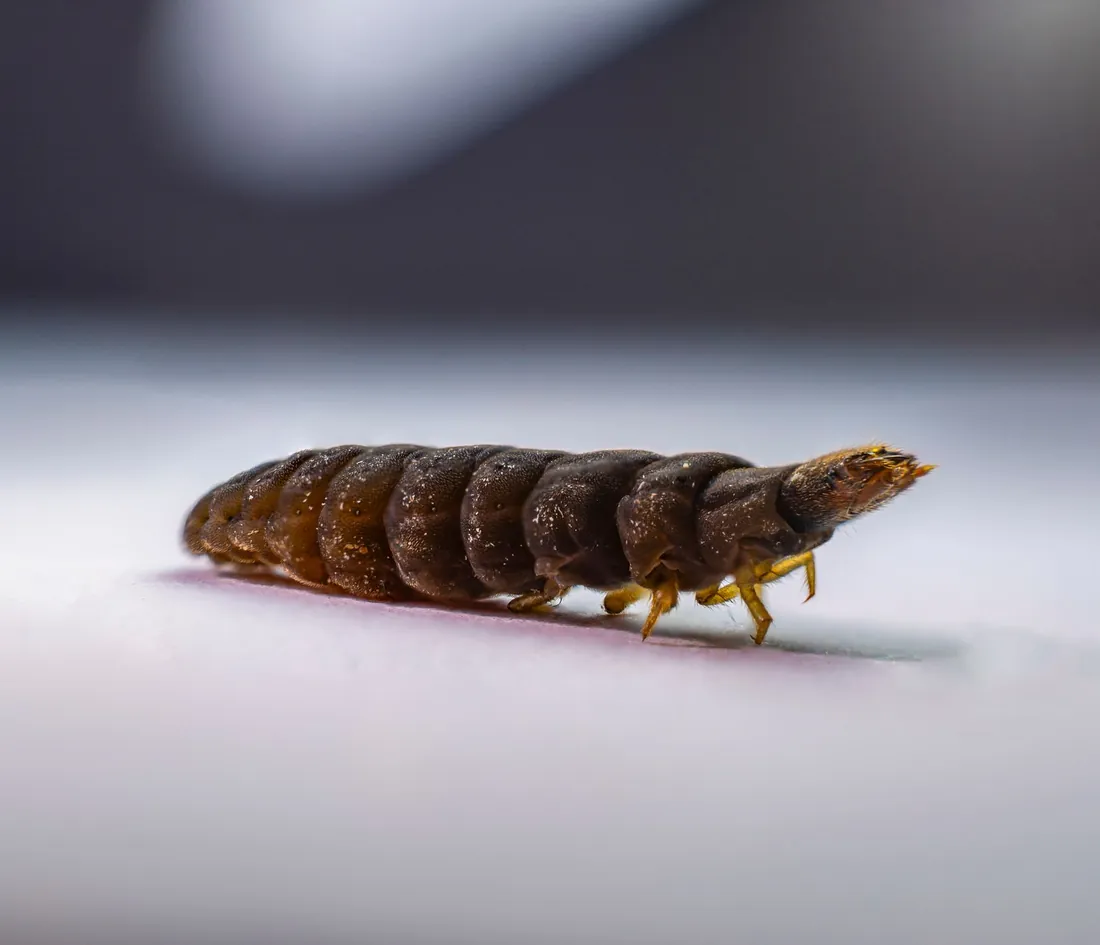
Mostly nocturnal and hide in moist locations such as under stones and mulch.
Feed on live or dead plants and insects.
Attracted to lights.
Move into homes to find food or shelter from outdoor elements.
Use their pinchers for defense and for sparring with rival earwigs.
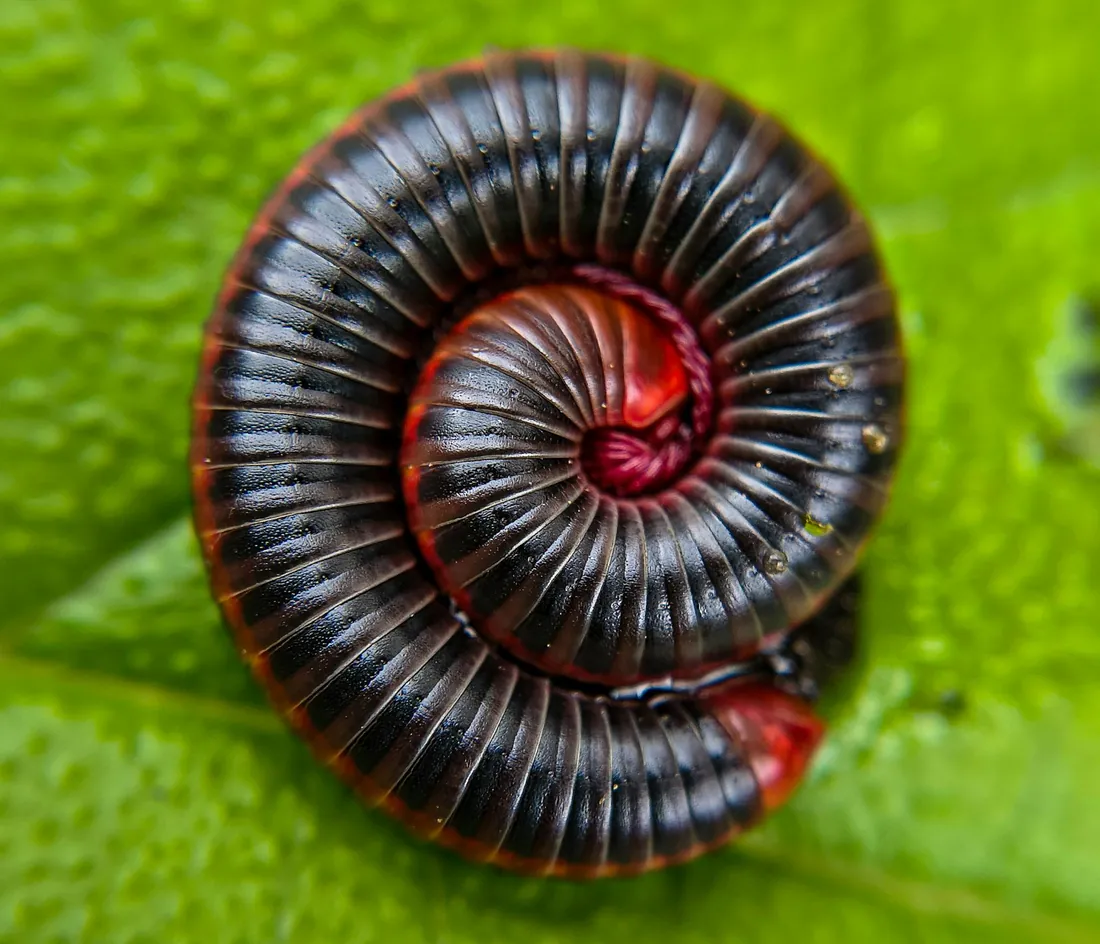
Species 02: Millipedes
Occasional Invader
Field photo — millipedes
Identification & habits
Adults about 1/16 – 4½" long.
Cylindrical and worm-like, sometimes slightly flattened.
Blackish or brownish; some red, orange or with mottled patterns.
One pair of short, 7-segmented antennae.
Cluster of simple eyes on each side of the head.
Most body segments bear two pairs of legs.
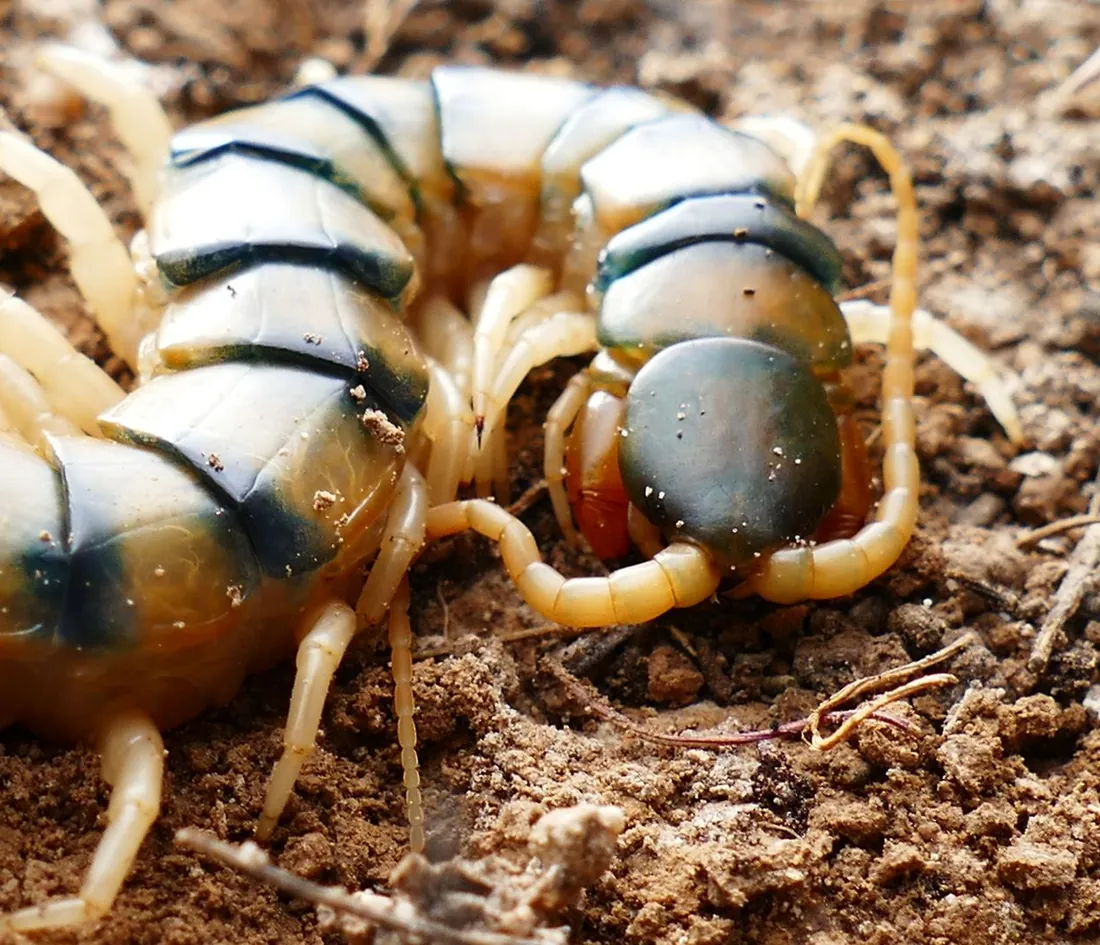
Species 03: Centipedes
Occasional Invader
Field photo — centipedes
Identification & habits
Adults about 1/8 – 6" long; elongated, flattened and worm-like.
Yellowish to dark brown, sometimes with darker stripes or markings.
One pair of antennae.
Flat, segmented bodies with one pair of legs per segment.
14-50 segmented.
Some with compound eyes; most with a cluster of simple eyes per side, or no eyes.
Total leg pairs number 15-177.
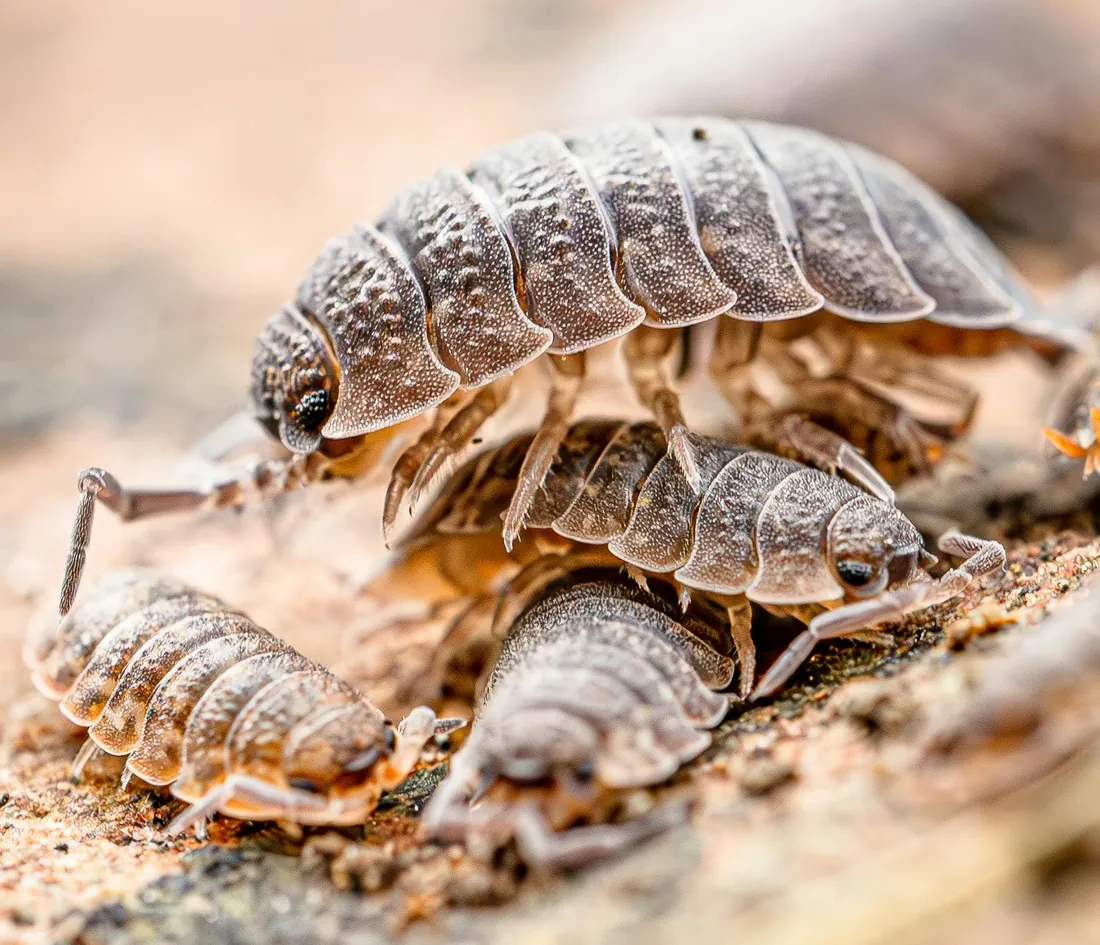
Species 04: Pill Bugs
Occasional Invader
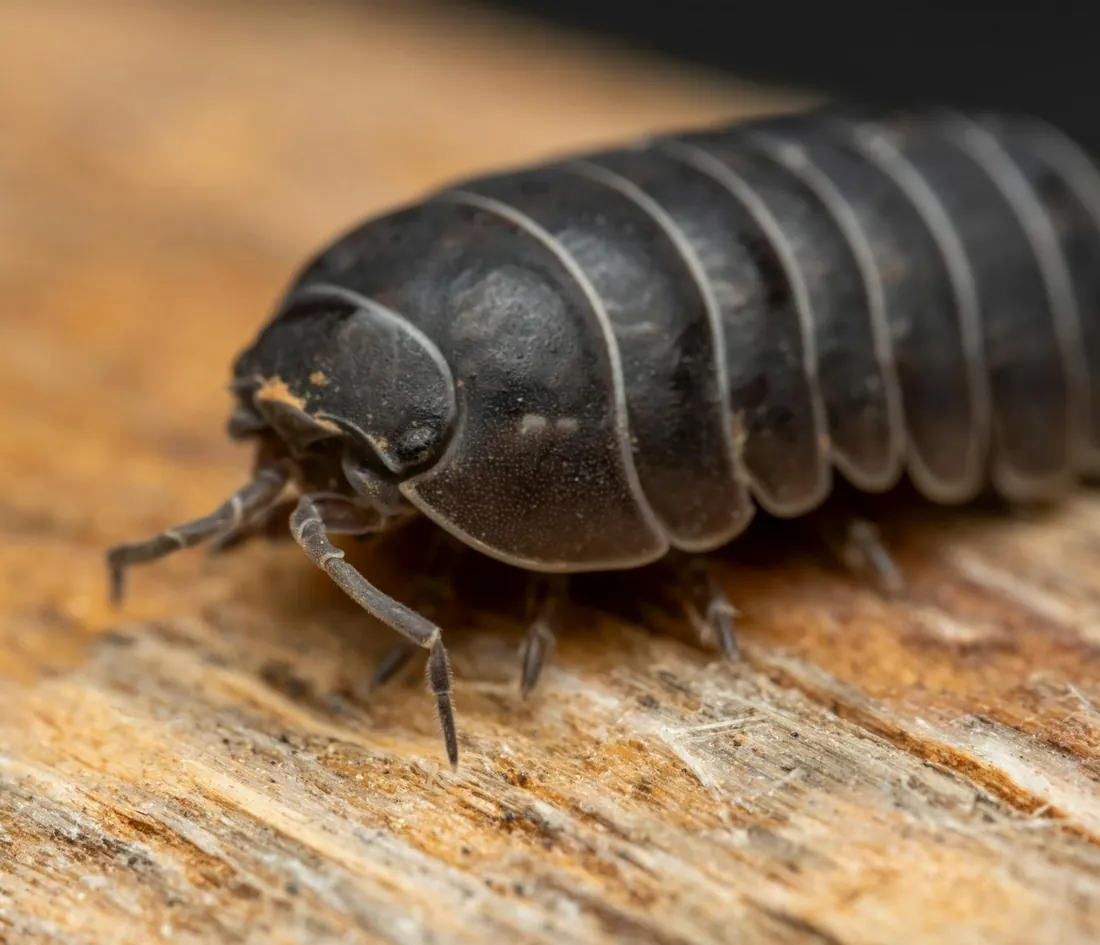
Field photo — pill bugs
Identification & habits
Adults about 5/8" long.
Raised above but flat or hollow beneath.
Slate gray.
7 pairs of similar legs.
2 pairs of antennae (one tiny, the other visible).
Roll up into a tight ball when disturbed.
Species 05: Sow Bugs
Occasional Invader
Field photo — sow bugs
Identification & habits
Crustaceans and arthropods, not insects.
Adults about 5/8" long.
Raised above but flat or hollow beneath.
Dark to slate gray.
7 pairs of similar legs.
2 pairs of antennae (one tiny, the other readily visible).
Roll up into a loose ball when disturbed.
Species 06: Silverfish
Occasional Invader
Field photo — silverfish
Identification & habits
Adult body length about ¾" long.
Wingless with a flattened body.
Teardrop / carrot / fish-like shape from head to rear.
Covered with scales.
Silvery to gunmetal in color.
Long, thread-like antennae.
Posterior end of the abdomen with 3 long bristle-like appendages.
Species 07: Crickets
Occasional Invader
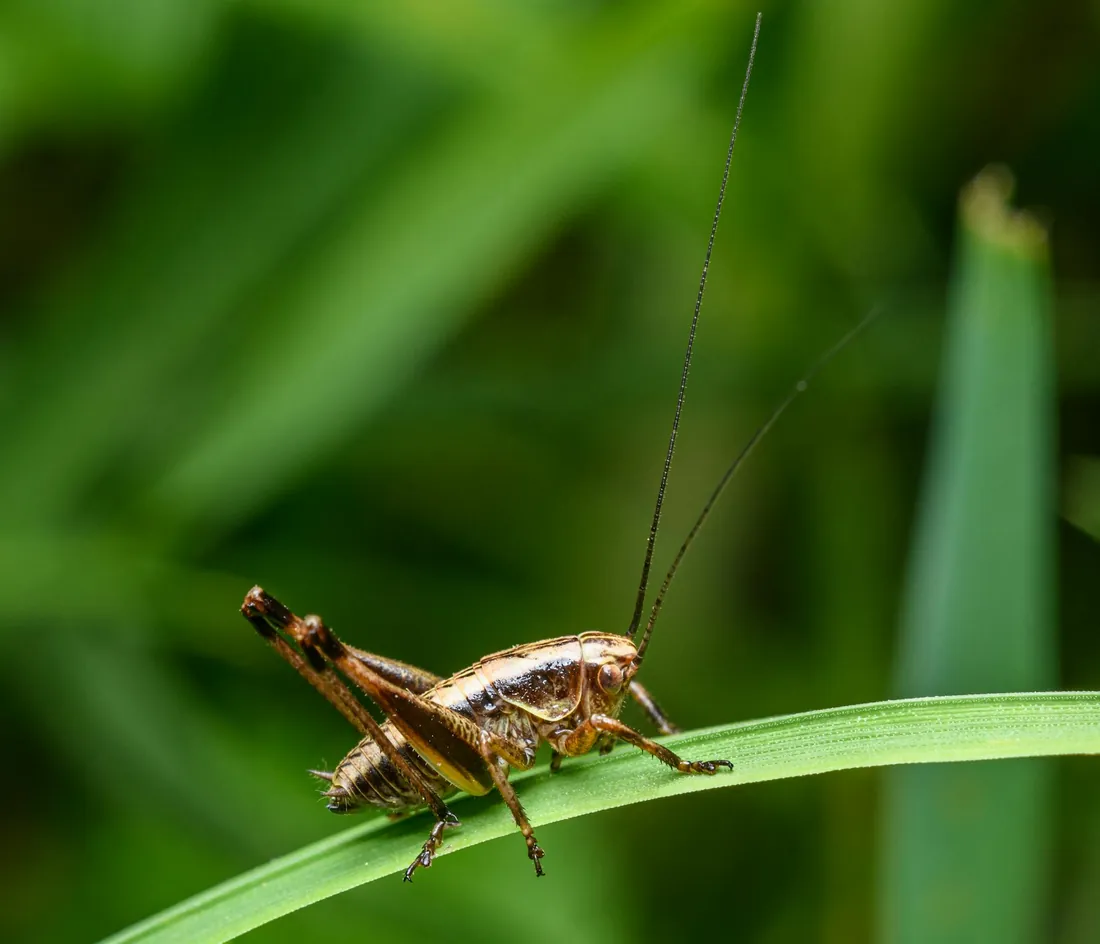
Field photo — crickets
Identification & habits
½" to 1¼" in size.
Two basic types of structure-invading crickets:
Camel / Cave / Stone Crickets
Field Crickets
Many colors but most common are brown, tan and green.
1-3 generations per year.
Found around home wells, drainage culverts/pipes, A/C units, garages, etc.
Field crickets make a chirping sound with their hind legs.
Camel crickets are usually found in cool, moist, dark areas — crawl spaces and finished basements.
Species 08: Springtails
Occasional Invader
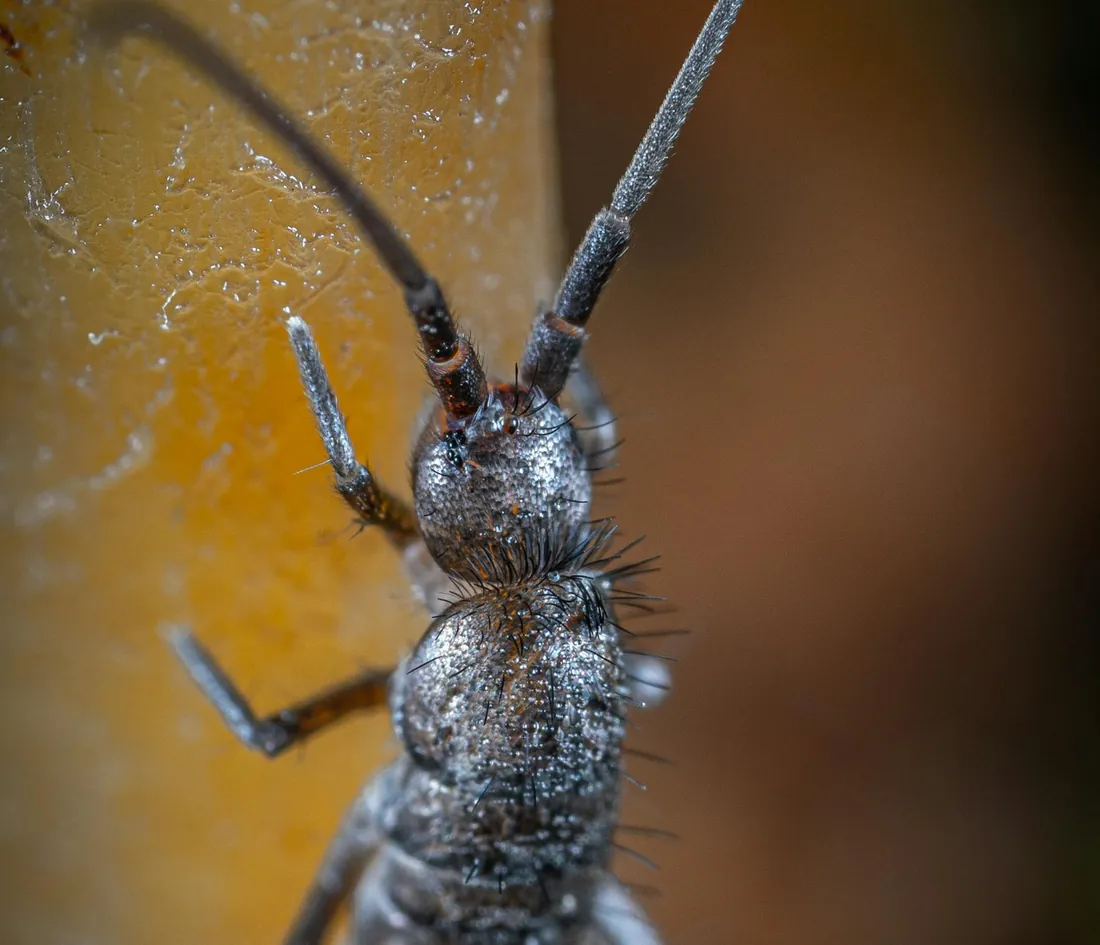
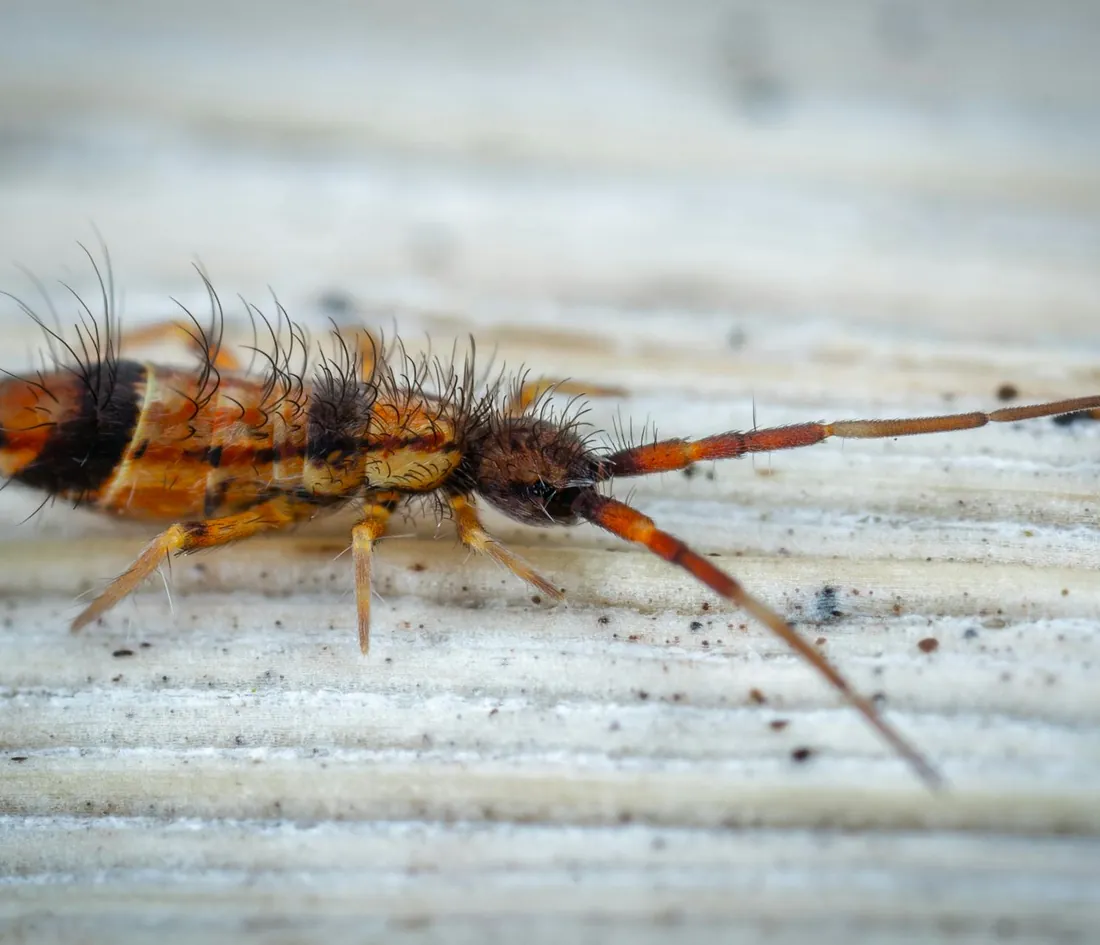
Field photo — springtails
Identification & habits
Adults are 1/32 – 1/8" long.
Soft, wingless with an elongated or globe-shaped body.
Whitish or gray, sometimes purple, blue, green, yellow or orange.
Head with chewing mouthparts; small eyes.
Short antennae, 4-6 segmented.
Abdomen 5-6 segmented; forked, with a small tubular structure.
Legs slender, small and unmodified.
Species 09: Carpet Beetles
Occasional Invader
Field photo — carpet beetles
Identification & habits
1/32 – ⅛" in length.
Color varies — shades of brown, white and black.
Chewing mouthparts.
Antennae short, with a 3-segmented compact club.
Body elongate-oval to almost circular, covered with scales or hair.
Also known as “fabric pests” — they have the ability to digest keratin found in wool, hair, fur, feathers, horns and hoofs.
Tend to infest carpets, blankets and coats.
Prefer to feed in dark, undisturbed areas.
On dead insects, they typically feed from within; the accumulation of fine powder beneath the specimen is usually the only indication of their presence.
Species 10: Brown Marmorated Stink Bug
Occasional Invader
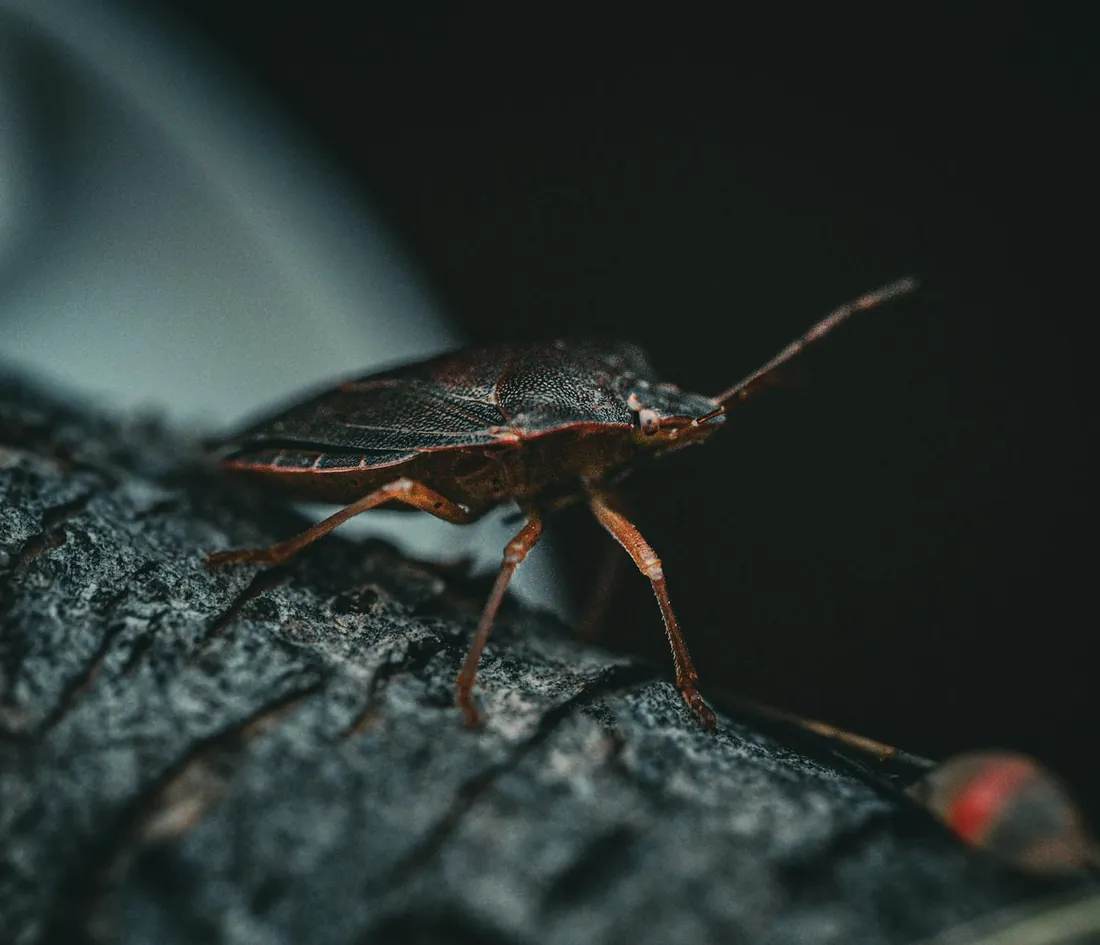
Field photo — brown marmorated stink bug
Identification & habits
12-17 mm long.
Shield-shaped body.
Brown with light and dark bands on the antennae and wings.
Named for the unpleasant odor they produce when threatened.
Feed on apples, peaches, blackberries, tomatoes, corn, soybeans, lima beans and green peppers.
Move inside the home through cracks and other openings; spend the winter hiding in walls, attic or crawl space.
Will not reproduce inside structures or cause damage.
Can produce allergic reactions in some individuals sensitive to their odor.
Controlling Occasional Invaders
Field Protocol
Not sure what's invading?
Send us a photo or call — we'll identify it and give you a treatment plan.