Call Now Free Quote

Blood Feeders

Mosquitoes, bed bugs, ticks, fleas — and how we control every one of them.

Species 01: Mosquitoes

Blood Feeder
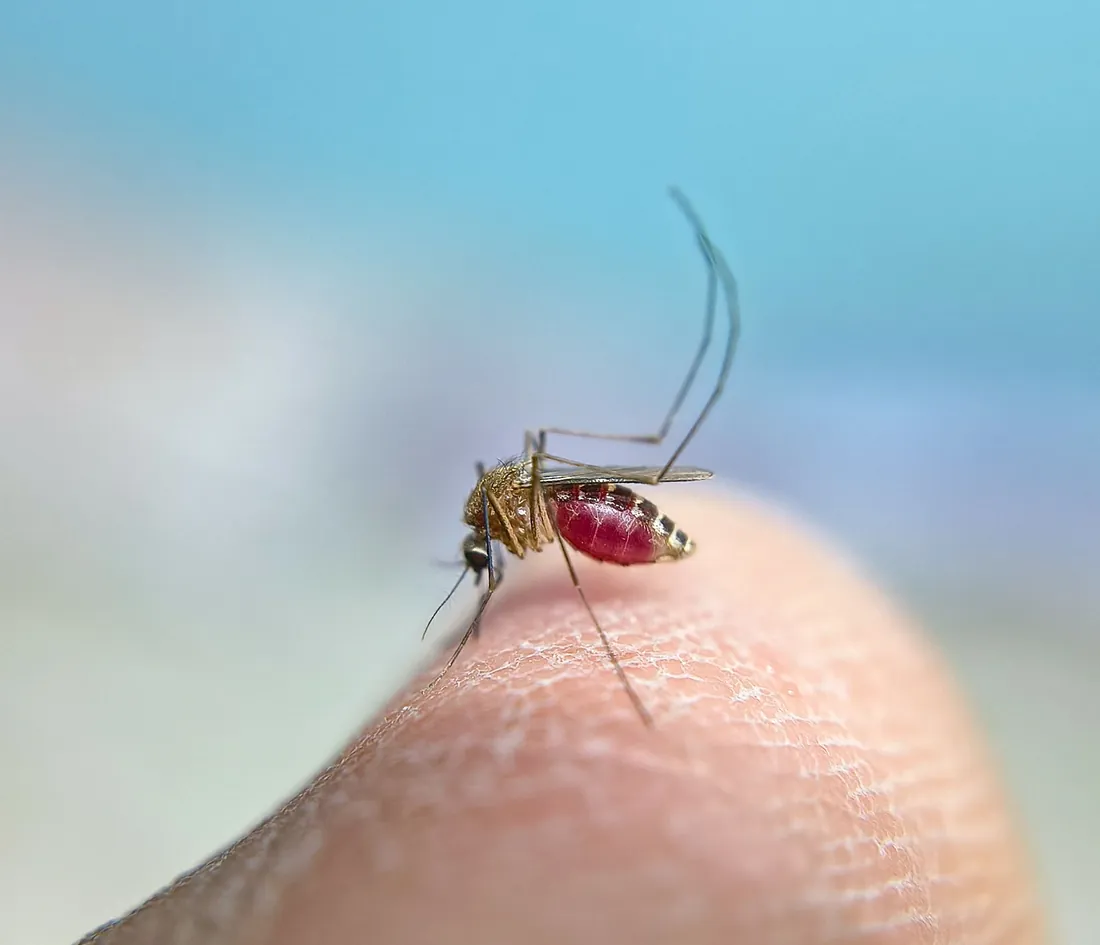
Mosquito resting on a pale surface
Field photo — mosquitoesSPEC. BF-01

Identification & habits

  • Adults 1/8 – 3/8" long.
  • Body and legs covered with scales.
  • Mostly gray to dark, some marked with white, silver, green or iridescent blue scales.
  • Head with long beak; antennae 15-segmented, feathery in male, hairy in female.
  • Two pairs of long, narrow wings with scales along veins and margin.
  • Habitat outdoors: ponds, lakes, leaves of plants, tree holes, etc.
  • Eggs deposited on water, in rafts on water, or on moist soils near water.
  • Immature mosquitoes (egg, larva, pupa) cannot breathe underwater.
  • Prefer stagnant water when depositing eggs.
  • Feed at dawn and dusk on the blood of animals or humans.
  • Locate food sources using their antennae to detect carbon dioxide.
Species 02: Bed Bugs

Blood Feeder
Close-up of a bed bug on fabric
Field photo — bed bugsSPEC. BF-02

Identification & habits

  • Adults about 4 to 5 mm long (size of an apple seed).
  • Broadly oval and flattened body that is wingless.
  • Brown to reddish brown (after feeding).
  • Antenna 4-segmented; 3rd segment longer than 2nd and 4th.
  • Nymphs are white just after molting, then light tan before feeding.
  • Go through 5 instar development stages before becoming an adult.
  • Preferred hosts are humans; feed on bare skin while you sleep.
  • Have been known to survive up to a year without a meal.
  • Females lay 1-5 eggs per day; 200-500 eggs per year.
  • Eggs found in cracks or white surfaces, secured with a transparent cement.
  • Hitchhikers — easily transported on humans, furniture or belongings.
  • Found in box springs, bedding, dressers, picture frames and almost anywhere.

Species 03: Ticks

Blood Feeder
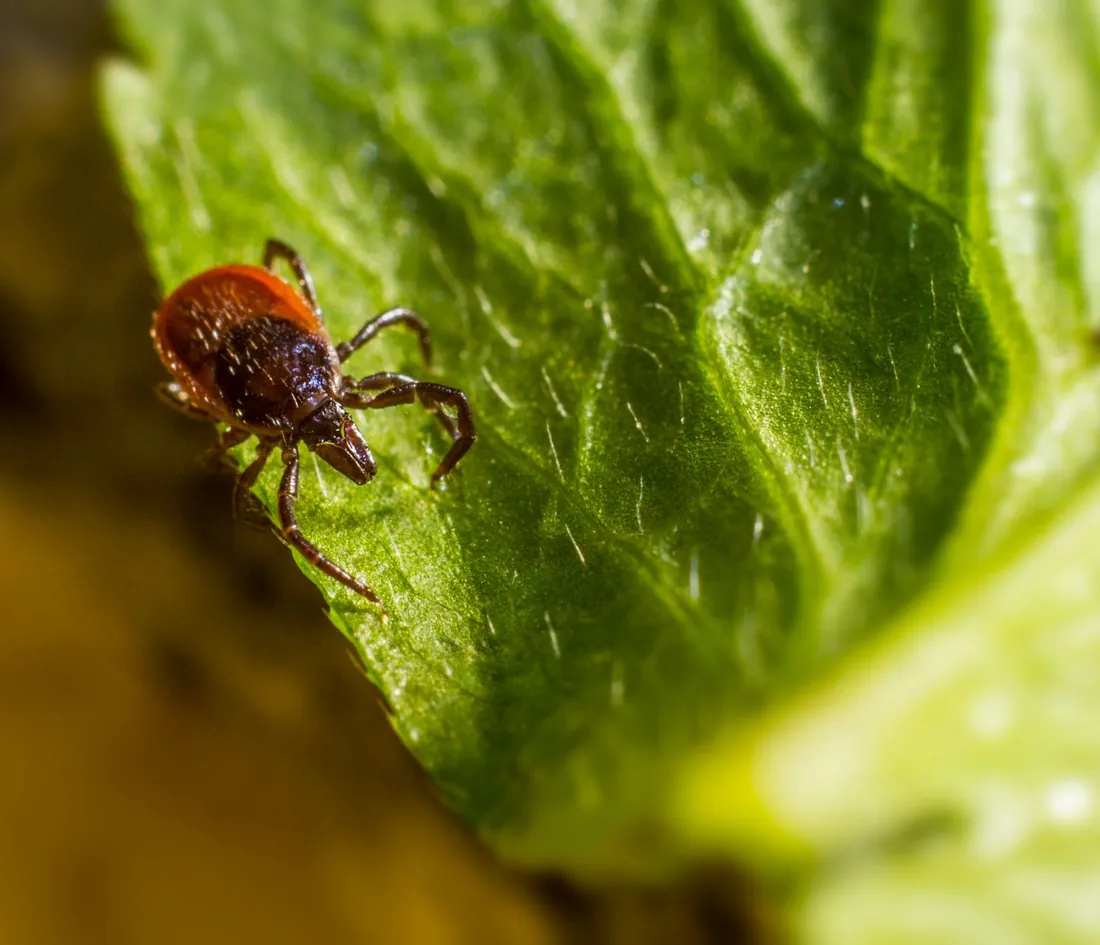
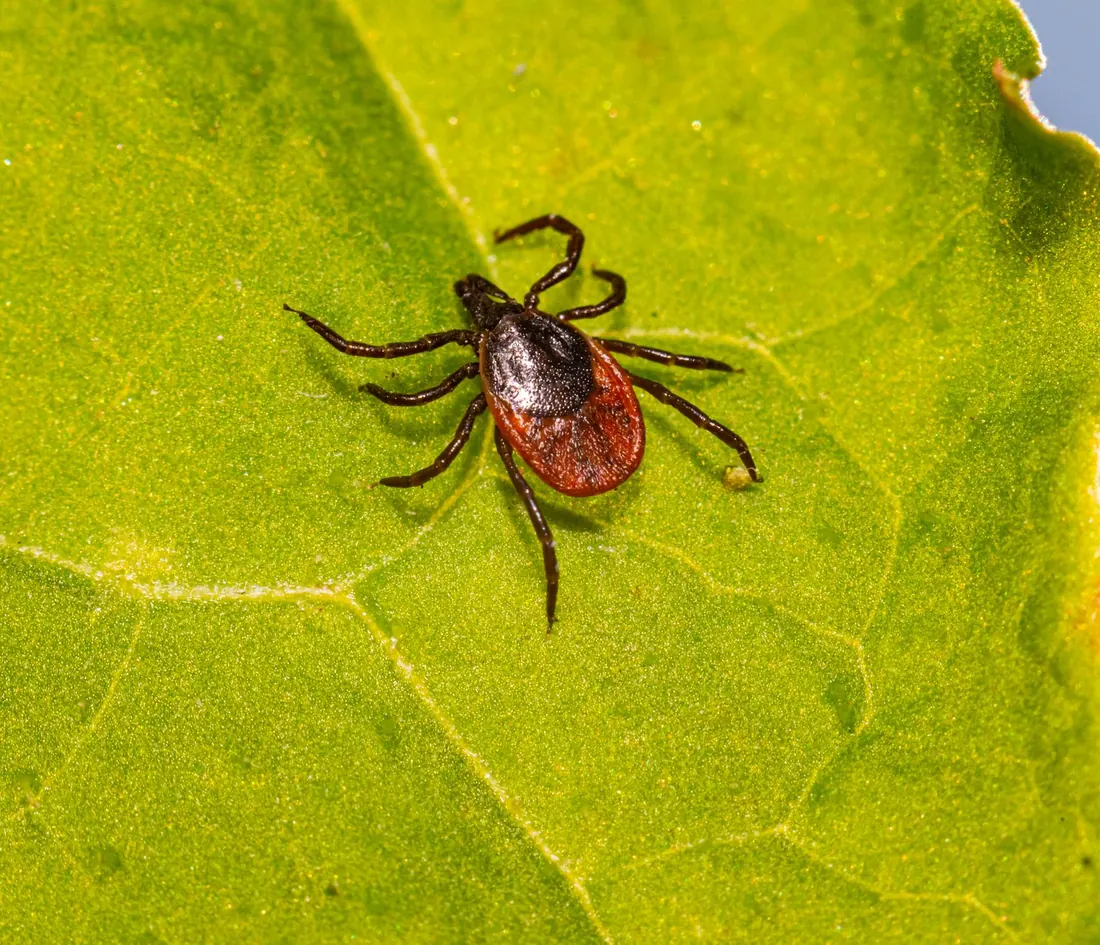
Tick climbing on a blade of grass
Field photo — ticksSPEC. BF-03

Identification & habits

  • Unengorged adult female about 3/16" long; male slightly smaller, 1/8".
  • Body oval, dorsoventrally flattened (top to bottom).
  • Brown with whitish to grayish markings, often with a silver hue on the dorsal shield.
  • Both larvae (6 legs) and nymph (8 legs) with red markings near eyes and lacking white on the dorsal shield.
  • Feed on blood of animals and humans.
  • Don't usually survive well indoors — usually carried in on a pet.
  • Engorged female drops off the host and seeks shelter to lay eggs — 4,000 to 6,500 eggs over 14-32 days, then dies.
  • Found outdoors in grassy low vegetation, on wildlife and trees.

Species 04: Fleas

Blood Feeder
Extreme close-up of a flea in animal fur
Field photo — fleasSPEC. BF-04

Identification & habits

  • Adults about 2.5 mm long.
  • Body flattened side to side; wingless.
  • Brownish black to black, but reddish black when full of blood.
  • Compound eyes well developed; femur of hind leg with 10-13 bristles on inner side.
  • Short antennae.
  • Mature larvae about 1/8 – 1/4" long; whitish, slender, eyeless and legless.
  • Females lay 4-8 eggs after each blood meal — 400-500 during their lifetime.
  • Eggs deposited on or between hairs or in nest/bedding material; oval, whitish, about 1/64" long, hatch in 1-12 days.
  • Hitchhikers that jump about 6" vertically.
  • Found where animals sleep and along travel paths — high moisture areas.
  • Prefer hairy animals: dogs, cats, rabbits, squirrels, rats, mice and other domesticated or wild animals.

Reclaim your yard, your sleep, and your sanity

From mosquito barriers to bed bug treatments, we've got the right tool for the job.